
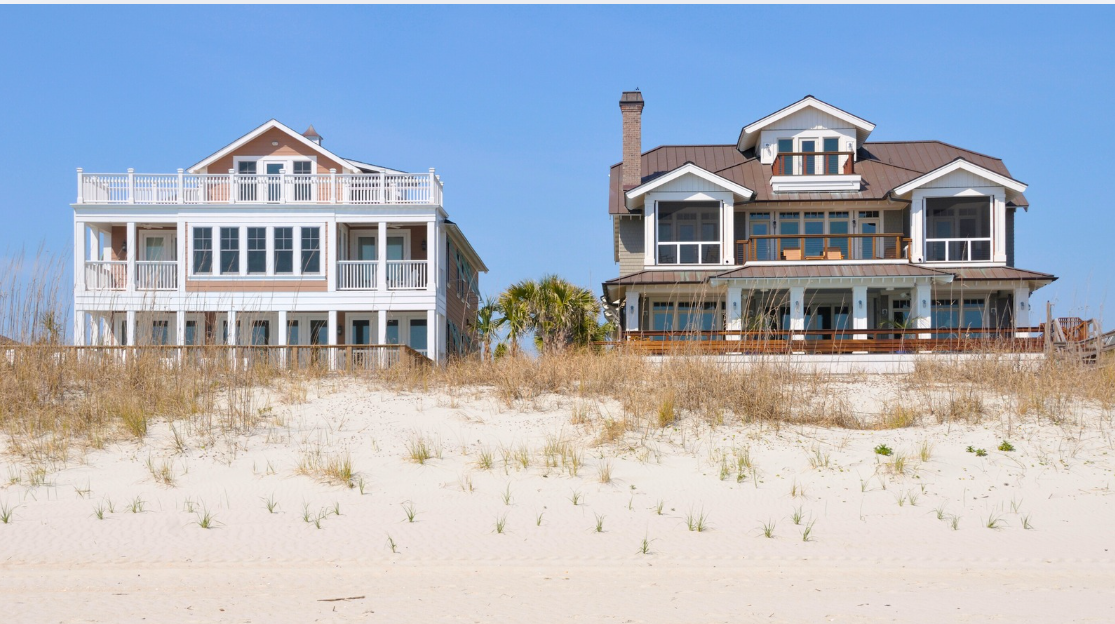
Beach House Bliss: Finding Your Perfect Coastal Getaway
From ocean views and beach access to spacious decks and community amenities, learn how to find the features that fit your needs.
There’s a particular moment in every beach house search when the excitement of “we can actually do this” begins to sharpen into something more specific. It’s that moment when you realize that “beach house” isn’t a category so much as a universe of options. Oceanfront bungalows and canal-side cottages. Gulf-front condos on the sixth floor. Barrier island estates with private dune crossings. Village homes two blocks from the sand, tucked under live oaks, with outdoor showers and peeling paint, and thirty years of rental history. Beach club communities where the amenities are the point and the golf cart is the primary vehicle. Old fish-camp towns being rediscovered by buyers who want authenticity over polish
All of these are beach houses. But none of them is the right beach house for everyone.
This guide is designed to help you understand the major categories and the specific features, trade-offs, and buyer profiles that define each. It’s designed so that when you begin your search in earnest, you’re looking in the right places for the right reasons. The buyers who find their perfect beach house quickly are the ones who’ve done this thinking first.
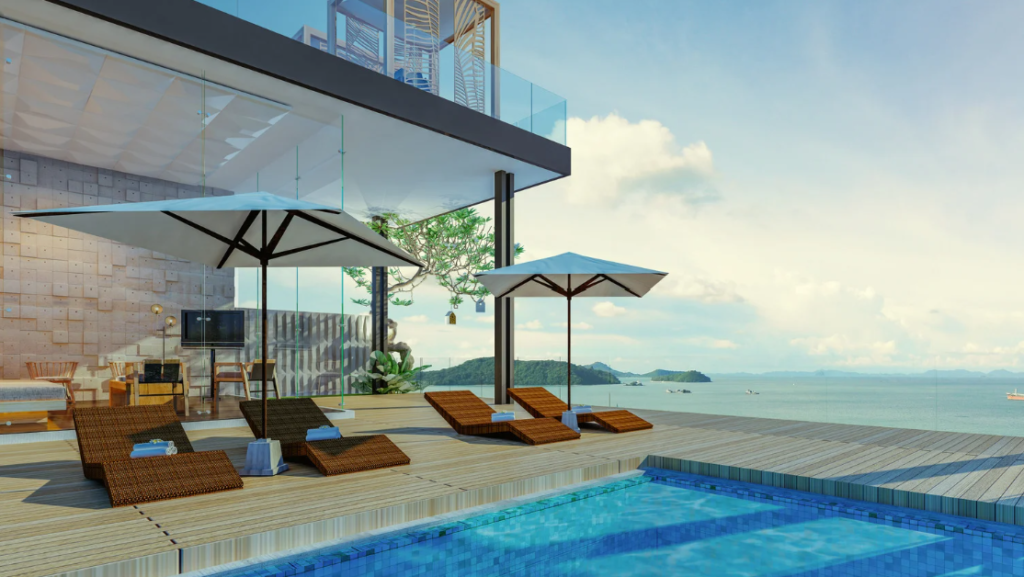
The First Question: What Is the Beach House For?
Before any other consideration, be honest about the role this property will play in your life. The answer shapes every subsequent decision: location, property type, size, amenity priorities, and budget allocation.
Primary residence. You’re relocating to the coast. You’ll live here full time, shop here, build community here, and be here through hurricane season as well as high summer. Year-round livability, proximity to services, and community depth matter as much as the beach itself. The best primary residence beach towns are the ones with enough going on eleven months of the year to sustain a real life — not just the two months when everyone else arrives.
Second home / seasonal retreat. You’re maintaining another home somewhere else and this is where you come to decompress. Low maintenance is a premium — the property should enhance your time here, not demand it. Lock-and-leave capability, good property management infrastructure, and a community with the right seasonal rhythm matter more than the finest custom finishes.
Investment / vacation rental. Income generation is a meaningful part of the financial rationale. Rental potential — measured in occupancy rates, average daily rates, and the market’s demand depth — becomes a primary filter. Certain property types, locations, and amenity profiles rent dramatically better than others, and understanding those distinctions before you buy is essential.
Hybrid. Most buyers are some combination of two or three of the above. The key is to be honest about which role is primary when they conflict — because they will conflict, and the trade-off you make most often will define whether you’re satisfied or quietly frustrated with the property five years from now.
The Major Property Types
Oceanfront and Beachfront Properties
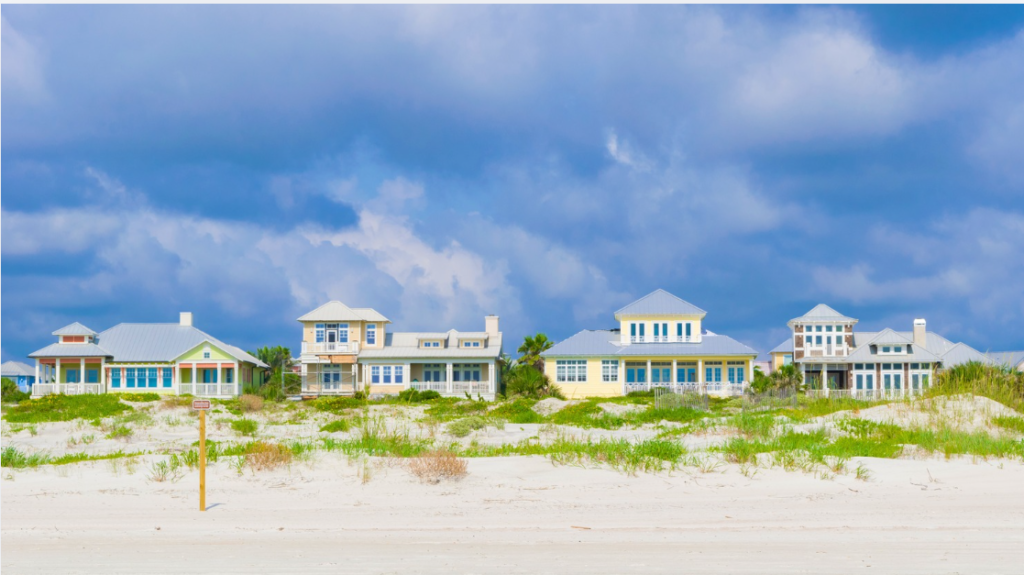
The purist’s answer. Direct access to the water, unobstructed views, the sound of waves from your bedroom window — and the full premium that attaches to that position in every coastal market in the country.
Oceanfront property is finite in a way that no other real estate category quite replicates. You cannot add more oceanfront. You cannot move the ocean. Every piece of oceanfront that sells reduces the available supply by exactly one. That scarcity is the foundation of the category’s long-term value, and it’s why oceanfront appreciation has outpaced broader coastal market trends in nearly every region over every extended period anyone has studied.
The trade-offs are real and deserve honest treatment. Maintenance costs are significantly higher — salt air, wind, and wave action are relentless on building materials, and properties in direct ocean exposure require more frequent exterior maintenance, more robust building systems, and more attentive management than properties a few blocks inland. Insurance costs — particularly in hurricane-prone markets — can be substantial, and the flood insurance calculation for oceanfront properties in some markets fundamentally changes the ownership economics. And the most dramatic oceanfront positions are often less private, more exposed to wind, and physically less comfortable than properties with some vegetative buffer between the house and the dunes.
None of that is a reason to avoid oceanfront property. It’s a reason to go in with eyes open and a realistic budget for the carrying costs that come with the position.
Who it’s right for: Buyers for whom the direct ocean relationship is the non-negotiable — who want to fall asleep to the sound of surf and wake up to the horizon and would accept no substitute for that experience.
Ocean-View Properties
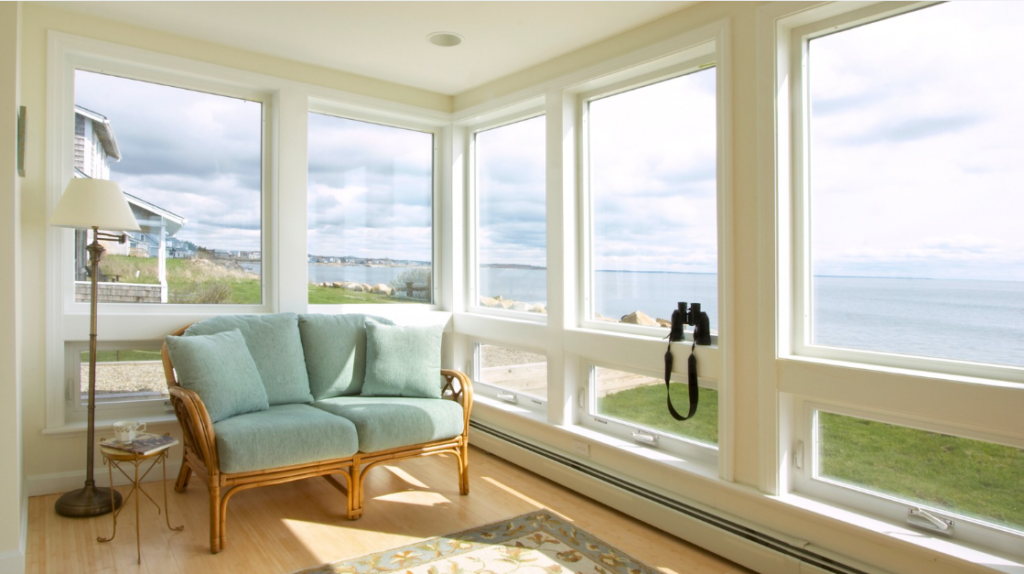
One step back from the water, often dramatically more affordable, and sometimes more livable. An elevated second-row home with sweeping ocean views from the main living level can offer a better daily experience than a cramped ground-level oceanfront cottage at twice the price — and the view, after all, is what most people are actually there for.
The ocean-view tier covers an enormous range: second-row single-family homes with private beach access through a deeded path, elevated condos with eastern exposures, hillside or bluff homes with panoramic views across a bay or inlet, and properties on elevated barrier island terrain where views extend in multiple directions across both the ocean and the sound.
The value proposition is often compelling. In many markets, the gap between oceanfront and second-row pricing is larger than the experiential gap warrants — particularly for buyers who intend to spend most of their time on the deck or in the living areas rather than on the beach itself.Who it’s right for: Buyers who want the visual experience of coastal living without paying the full oceanfront premium — particularly those considering elevated or hillside properties where views are maximized and direct beach exposure is minimized.
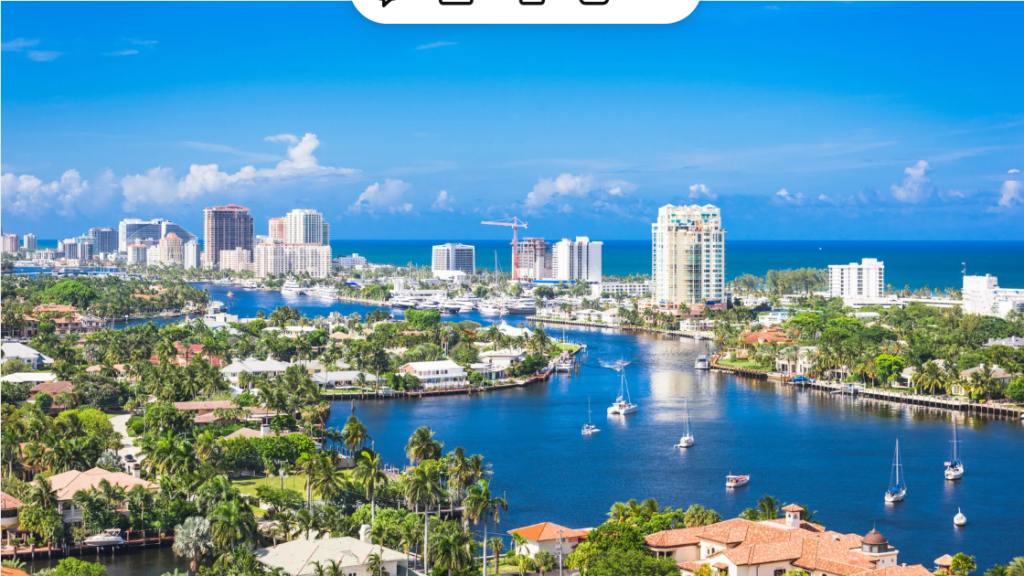
Canal and Waterfront Community Properties
Often overlooked by buyers focused on the ocean, canal and waterfront community properties represent some of the best lifestyle value in coastal real estate. Properties on tidal creeks, protected bays, intracoastal waterway frontage, and canal systems within planned communities offer direct water access — boat docks, kayak launches, fishing from the backyard — in a more protected, calmer environment than direct ocean exposure.
The boating lifestyle is the primary driver here. For families with boats, direct water access from the property is transformative — the boat is a practical extension of daily life rather than a logistical project. Waking up early, untying the dock lines, and being on the water in minutes is a fundamentally different experience than trailering to a launch ramp.
Canal and waterfront community properties also tend to perform well in the rental market for the right audience — boating families, fishing enthusiasts, and buyers who want calm water swimming and paddleboarding rather than ocean surf.Who it’s right for: Boating and fishing families for whom water access means more than ocean views; buyers seeking calmer water and a more protected setting; those who want active water recreation as the organizing principle of the beach lifestyle.
In-Town Beach Community Properties
Not every beach house buyer wants to be on the water. The in-town segment — properties within a short walk or easy bike ride of the beach, in the village fabric of a beach community — delivers a distinct lifestyle experience that, for many buyers, is more satisfying than direct water exposure.
Beach town living has its own pleasures. Walking to dinner, to the farmers market, to the coffee shop, to the ice cream stand the kids have loved for fifteen years — the social and communal texture of a beach village is a genuine lifestyle asset that oceanfront isolation can’t provide. The best beach towns have developed a civic character over decades: independent restaurants, local shops, community events, the particular mix of permanent residents and seasonal visitors that gives a place its personality.
In-town properties are also typically less maintenance-intensive, more affordable to insure, and easier to leave between visits — factors that matter significantly for second-home buyers who don’t want their vacation property to become a source of anxiety when they’re not there.
Who it’s right for: Buyers who value community and walkability over direct water exposure; families who want the beach lifestyle rather than a specific property position; those seeking lower carrying costs without sacrificing the beach town experience.
Condo and Resort-Style Communities
The full-service model: professional property management, resort amenities, security, and often a vacation rental program that does the income-generation work for you. High-rise oceanfront condos, low-rise beach community developments, and resort-style gated communities each represent variants of this type.
The appeal is straightforward. Condos and managed communities are the most lock-and-leave option in coastal real estate — you own the unit, the association manages the building and grounds, and when you’re not there, a rental management company handles the income side if that’s part of your plan. The lifestyle is contained and convenient: pool, fitness, maybe a restaurant or bar, beach service, and the knowledge that someone else is handling maintenance.
The trade-offs are the inverse of the appeal. You’re one unit in a building or a community, and the experience — while comfortable and often excellent — is inherently more generic than ownership of a distinct private property. HOA fees can be substantial. Governance disputes happen. And condo values, in some markets, are more sensitive to the condition of the overall building and association finances than to the individual unit itself.Who it’s right for: Buyers prioritizing convenience and low individual maintenance over privacy and distinctiveness; those whose primary goal is a high-quality rental investment; snowbirds and part-time residents who want a secure, managed property.
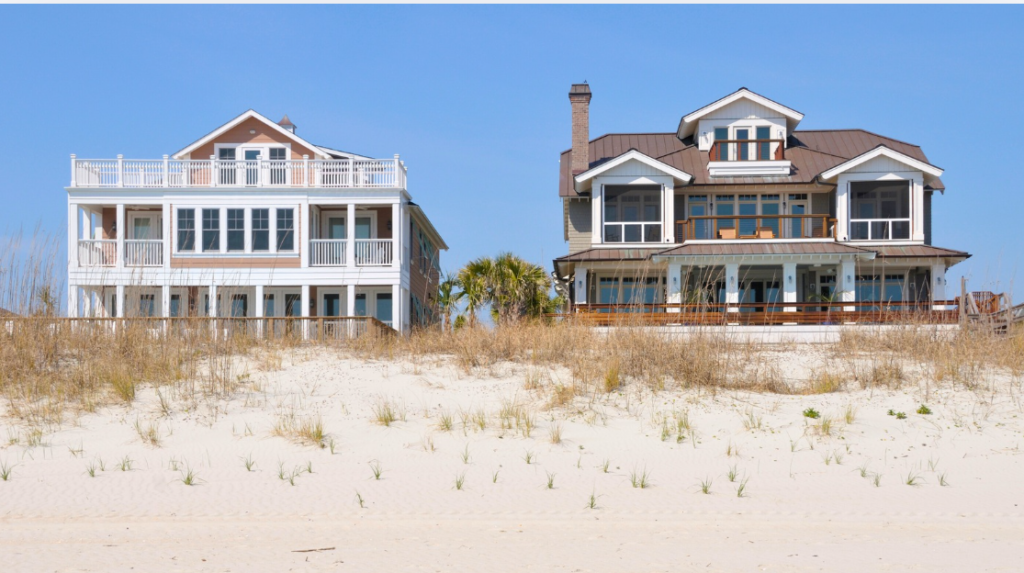
The Features That Define the Experience
Beach Access: Deeded, Community, or Public
How you get to the water matters more than most buyers anticipate. Deeded beach access — a private path or easement that belongs to your property — is the gold standard and carries a meaningful premium in most markets. Community beach access, shared among a neighborhood or association, varies enormously in quality and can be excellent or frustrating depending on parking, crowd levels, and maintenance. Public beach access is democratic and free, and in towns with strong beach management programs, public access can be perfectly adequate — particularly for buyers who prefer the social energy of a public beach to the solitude of a private stretch.
The key question to ask: at peak season, on a Saturday in July, how does the beach access actually work? The answer should inform your decision more than the description in the listing.
Outdoor Living: Decks, Porches, and the Space Between
At a beach house, outdoor living space is as important as interior square footage — arguably more so. A generous covered porch facing the ocean, a deep deck with space for a proper outdoor dining table, an outdoor shower station that actually functions as part of daily life, a rooftop deck with 360-degree views — these are the spaces where beach house life actually happens, and properties that do them well are worth paying for.
Evaluate outdoor space the way you’d evaluate an interior room: is it functional, is it sheltered from wind and sun at the times of day you’ll actually use it, is it connected to the interior in a way that makes casual in-and-out living natural?
Community Amenities: When the Beyond-the-Property Experience Matters
Beach club membership, community pools, tennis and pickleball courts, golf cart trails, fitness facilities, and organized social programming — these amenities define a significant segment of the beach community market, and for certain buyers they’re the primary draw.
The communities that do amenities best treat them as the organizing infrastructure of a social life, not a checklist of features. If the community’s social fabric — the neighbors you’ll meet at the pool, the events on the community calendar, the shared rituals of summer — is part of what you’re buying, visit during the season you intend to use the property and spend time in the common spaces before making a decision.
Size and Configuration: Right-Sizing for Your Actual Use
Beach houses are used differently than primary residences, and the right size for a beach house is often not what buyers initially expect. Larger properties that work beautifully for a full extended family during the peak July week can feel empty and expensive during the shoulder season visits that may actually account for most of your nights in the property. Smaller properties — the classic three-bedroom beach cottage that sleeps eight with the right bunks and pull-outs — often generate better rental income, are easier to maintain, and are simply more fun to inhabit during visits of less than a week.
Be honest about the typical occupancy of your beach house visits, not the maximum occupancy of the once-a-year big gathering.
The Markets: Matching Lifestyle to Location
Every coastal market has its own character, and the right beach house is also the right beach town — a place whose particular rhythms, culture, and physical character align with what you’re actually looking for.
The Outer Banks, North Carolina. Raw, wide beaches, strong fishing culture, the particular wildness of a barrier island far from urban centers. Best for buyers drawn to natural beauty and a less developed, more elemental coastal experience.
The South Carolina Grand Strand. Warmwater beaches, golf, and the Lowcountry landscape that reaches inland from the coast. Myrtle Beach for value and activity; the ACE Basin and Edisto Island ends of the spectrum for remoteness and natural character.
Florida’s Gulf Coast. Sugary white sand, calm warm water, and the cultural range from Destin’s resort energy to 30A’s curated coastal design scene to Naples’s luxury concentration. Best for buyers who want warm, swimmable water and a sophisticated lifestyle infrastructure.
The Jersey Shore. Boardwalk culture, dense beach communities, and the particular social energy of summer communities with multi-generational attachment. Best for buyers who want community and history over solitude and wilderness.
New England Coastal Communities. Cape Cod, the Maine Coast, Block Island, Nantucket — architecture and landscape that have no equivalent elsewhere. Shorter seasons, higher prices, and a cultural depth that rewards buyers willing to embrace the full coastal year.The Pacific Coast. From the Oregon Coast’s dramatic wildness to Southern California’s year-round outdoor life, the Pacific presents a fundamentally different ocean — cooler, more powerful, more visually dramatic — and beach communities whose character reflects that difference.
A Framework for Your Search
Before you begin looking at listings in earnest, work through these five questions:
One: What is the property primarily for? Primary residence, second home, rental investment, or some combination — and which role wins when they conflict?
Two: What is your relationship to the water? Do you need to be on it, to see it, or simply near it? Each answer corresponds to a distinct market tier and price point.
Three: How do you actually want to spend your time there? Surfing and swimming, boating, fishing, reading on the porch, exploring the town, hosting family gatherings — the activity profile should drive the property type.
Four: What is your maintenance tolerance? Oceanfront properties require active management. In-town properties are easier to leave. Condos externalize maintenance but internalize governance. Be honest about which model fits your life.
Five: What does a great beach community mean to you? Some buyers want the social fabric of a village; others want the solitude of a remote stretch of coast; others want the comprehensive amenities of a resort community. None is wrong — but they correspond to very different properties, and conflating them leads to the most common form of beach house buyer’s remorse.
The right beach house for you is the one that honestly serves the life you’ll actually live there — not the life you imagine during the worst February of your mainland career, but the specific, recurring, deeply pleasurable life you’ll build on the coast.
BeachHouse.com exists to help you find it.
Browse current listings across all coastal markets at BeachHouse.com, and use our Market Guides to understand the specific character, pricing, and lifestyle dynamics of the coastal communities you’re considering.